Dry Skin And Breakouts At The Same Time?
Dry, tight skin and breakouts can happen together. Understand what to consider before changing your cleanser, moisturiser or routine.

Dry Skin And Breakouts At The Same Time? What To Consider Before Changing Your Routine
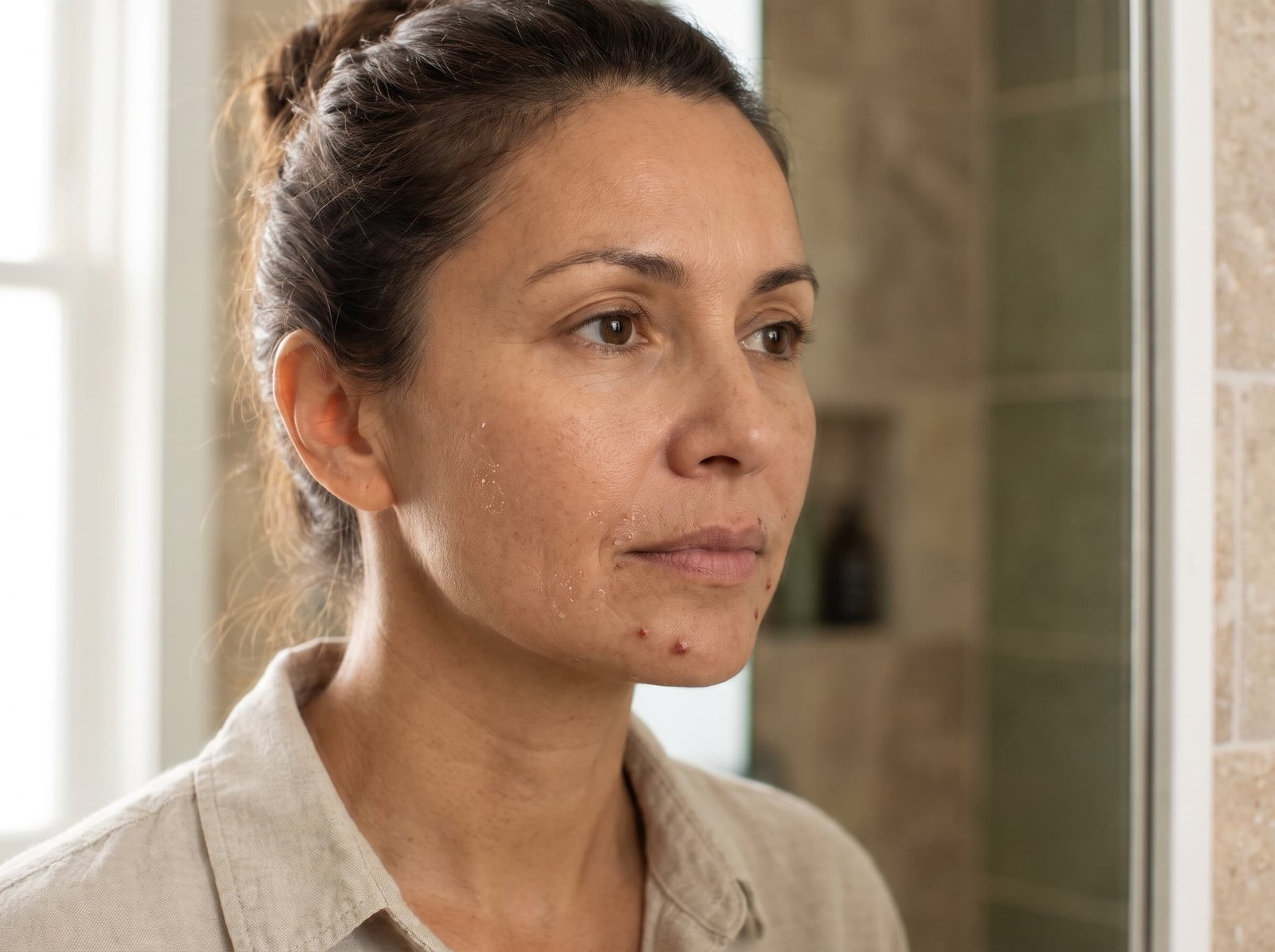
You reach for your moisturiser because your cheeks feel tight. Then you notice another spot along your chin, and the same question returns: will making your skin more comfortable make the breakouts worse?
Perhaps you have tried the opposite approach too. A cleanser aimed at blemishes, a little more exfoliation, a lighter routine. The spots still appear, but now your skin feels rough, makeup catches on dry patches, and even choosing what to apply has become tiring.
Dry skin and breakouts can feel like contradictory instructions. One seems to ask for more comfort; the other makes you afraid of giving it.
The useful starting point is to separate what your skin feels like from what you assume those feelings mean. Tightness, surface oil and spots are different observations. Understanding that distinction gives you a better basis for deciding what to change, what to keep and when to ask for help.
Dryness And Breakouts Are Not Opposite Ends Of One Scale
It is easy to picture skin on a single line: dry at one end, oily and blemish-prone at the other. Your experience may be less tidy.
Oil on the surface, water within the outer skin layer and the development of spots are related aspects of skin, but they are not the same thing. A shiny forehead does not tell you everything about how comfortably your cheeks are functioning. Equally, a tight feeling does not establish why a spot has appeared.
You might have cheeks that regularly feel dry and a chin where spots recur. Or your skin might usually feel oily, then become tight and flaky after changes to your routine. Those situations deserve different questions, even if both end with you searching for skincare for dry, acne-prone skin.
This is why the explanation that every breakout is caused by dehydration is too simple. It turns one possible concern into a universal cause and can encourage you to keep adding moisture while overlooking something else.
The more useful conclusion is narrower: skin can feel dry while also developing spots. Neither observation cancels the other, and neither gives you a complete diagnosis. Research examining acne, surface oil and skin-barrier measurements also shows why these features should not be reduced to one measure.
Start With What You Mean By Dry
Before choosing a richer cream, describe the discomfort more precisely.
Does your skin feel tight immediately after washing? Do you see small flakes around your mouth? Do your cheeks feel rough by the afternoon, or does a product sting when it previously felt comfortable?
These details matter because the word dry often carries several different experiences. A longstanding preference for richer textures is not the same observation as sudden burning after a new routine.
Notice where the feeling occurs as well. If your cheeks are uncomfortable but your forehead feels comfortable and looks shiny, treating your whole face as though every area has identical needs may miss what you are experiencing.
You do not need to settle on a perfect skin-type label before doing this. A simple description such as “my cheeks feel tight after cleansing, but the spots are mainly on my chin” is more useful than forcing everything into dry or oily.
It gives you something concrete to review and, if needed, explain to a professional.
Look At The Routine Around The Breakouts

When spots appear, the newest moisturiser can become the obvious suspect. It is worth considering, but the rest of the routine deserves attention too.
Perhaps you also changed your cleanser, started using an exfoliating toner more often, or introduced a blemish product across your whole face. If several things changed together, the sequence becomes difficult to interpret.
Some acne treatments can themselves cause dryness, peeling or irritation. That does not make them inappropriate, but it means comfort and treatment need to be considered together. Persistent discomfort is something to discuss with your pharmacist or prescriber, rather than trying to solve it by adding more cosmetic steps. Guidance on moisturising alongside acne care supports this distinction.
Review actual use, not just the names on the bottles. A product used occasionally is a different part of your routine from one applied morning and evening. A spot-focused product dabbed on one area is different from the same product spread over already uncomfortable cheeks.
The question is not simply whether each item is considered good. It is whether its purpose, frequency and method make sense alongside everything else you use.
A Tight Finish Is Not The Goal Of Cleansing
Spots can make you want to cleanse more thoroughly, especially when your skin looks shiny. Yet a tight, squeaky finish is not a useful target.
Choose gentle cleansing rather than scrubbing at the surface. Let the product do its intended job, rinse carefully and avoid turning a washcloth or cleansing tool into an extra exfoliation step. Current acne skincare guidance favours gentle, non-alkaline cleansing.
If washing is consistently the moment your skin becomes uncomfortable, that is a useful clue to review the cleansing step. It is not proof that you need another serum afterwards.
Likewise, visible flakes are not automatically a request for a scrub. When your skin already feels tender or stings, adding friction to make the surface look smoother can move the routine further away from comfort.
Ask a smaller question first: am I cleansing appropriately for what I need to remove, or repeating and intensifying the process because the spots make me anxious?
Moisturising And Breakout Care Can Belong In The Same Routine
Having spots does not automatically mean moisturiser is the wrong step. The useful question is which formulation suits your situation, rather than whether you are allowed to moisturise at all.
For acne-prone skin, look for a moisturiser described as non-comedogenic, meaning intended to be less likely to block pores. Guidance also advises avoiding oil-based preparations in acne care. This is a more relevant starting point than automatically choosing the richest balm because your skin feels dry. NICE skincare recommendations address this selection directly.
Treat that wording as useful guidance, not a personal guarantee. A suitable-looking label does not predict every aspect of how a finished product will feel on your skin.
Keep the whole formulation in view. A single familiar ingredient does not tell you everything about the texture or your experience of the product. Nor does a botanical origin establish that a formula is the right choice for you.
If you already have a moisturiser that feels comfortable and has been part of a reasonably stable routine, the appearance of one spot is not enough evidence to dismiss it. Equally, repeated discomfort deserves attention even when the packaging sounds reassuring.
The aim is a manageable routine that takes both concerns seriously, with professional input when the choice remains unclear.
Separate What Happened From What You Think Caused It
Imagine your chin has been breaking out, while your cheeks usually feel comfortable. You begin using an exfoliating cleanser every evening and add a new blemish product. Soon afterwards, your cheeks feel tight, and makeup catches around your mouth.
It would be tempting to conclude that your skin has suddenly become dry, or that the moisturiser you have used for months has stopped working.
What you actually know is more specific: the discomfort began after two changes, in areas that were previously comfortable. That sequence deserves a review before another purchase.
It does not prove which product caused the problem. It also does not tell you whether the chin spots and cheek discomfort have the same cause.
A useful next step is to avoid introducing further optional products while you clarify what is already happening. If a prescribed treatment is involved, ask the prescriber or pharmacist how to manage the discomfort and how your other products fit around it.
You have moved from “everything is wrong with my skin” to a question someone can help you answer. That is meaningful progress, even before you change a bottle.
Give The Next Change A Clear Purpose

Before adding or replacing anything, take a moment to answer three questions.
First, what am I trying to improve? Tightness after washing, recurring spots and burning during application are different concerns. Naming the one you are addressing helps you choose a relevant next step.
Second, what has changed recently? Include frequency and application, not only purchases. Using an existing product twice as often is still a change.
Third, what would help me understand the situation? That might be reviewing your cleansing step, asking about a treatment’s side effects, or seeking an assessment because you are unsure what the bumps are.
Where a cosmetic change is appropriate, introduce one change at a time. This will not identify every possible trigger, but it avoids adding several new uncertainties at once.
Keep observations brief and factual: what you used, where the discomfort occurred and when you noticed it. You do not need an elaborate tracking system or repeated mirror checks throughout the day.
The purpose is to make your next decision clearer, not to turn caring for your skin into another demanding task.
Know When A Skincare Review Is Not Enough
The word breakout is convenient, but it does not identify every kind of bump. If you are unsure what you are seeing, an assessment is more useful than choosing products for an assumed diagnosis.
Ask for professional help when spots persist despite your efforts, are deep or painful, leave scars, or affect how you feel about yourself. If an area becomes hot, swollen or increasingly painful, seek prompt medical advice rather than continuing a product experiment. NHS guidance explains when to seek help for acne.
Take your product list and a short account of what changed. Explain both the visible concern and the discomfort. “I want help with these recurring spots, but my cheeks now sting after washing” gives a fuller picture than discussing spots alone.
You can also mention relevant changes in your health, medicines or hormonal circumstances. They provide context for an assessment; the location of a spot alone cannot establish an internal cause.
Asking for that help is not an admission that you have failed to understand your skin. It is a way to stop carrying the uncertainty by yourself.
A Final Word
When your skin feels dry and keeps breaking out, it is easy to become cautious about every decision. A comforting cream feels risky. A blemish-focused routine feels uncomfortable. You can end up watching your skin closely while trusting your own judgement less.
You deserve a clearer starting point than choosing which concern to ignore.
Dryness and spots can exist together. That does not mean they share one cause, that every moisturiser is unsuitable, or that you need a more complicated routine. It means your experience needs to be considered in full: what you see, what you feel, what you use and what changed.
Begin with the part you can describe clearly. Notice whether cleansing leaves you tight, whether discomfort followed a new step, and whether recurring spots need an assessment rather than another cosmetic experiment.
The aim is not to become an expert in every ingredient or monitor every pore. It is to feel more confident about your next step and know when someone else can help you make it.
A considered routine leaves room for both the visible concern and your comfort. You do not have to dismiss one to take the other seriously.
Continue Reading
Sensitive Or Sensitised? Why Skin Can Suddenly React To Products It Once Tolerated – Understand the difference between a familiar pattern of sensitivity and a change in your skin’s response.
Do You Really Need To Double Cleanse? – Consider whether a second cleansing step has a clear purpose in your evening.
Why Your Skin Can Still Feel Dry After Moisturising – Explore the different roles of water, oils and lipids before deciding you need another moisturising layer.
Support Your Skin
Our natural product collection at Ossie Naturals is formulated specifically to support your skin’s natural adaptive processes. Each product provides the building blocks your skin needs, from barrier-supporting lipids to adaptive antioxidants.
We don’t believe in dramatic seasonal routine overhauls or aggressive treatments that fight against your skin’s natural processes. Instead, our approach focuses on gentle, consistent support that works with your skin’s intelligence rather than against it.
Join our private community on Facebook or join our Newsletter for access to seasonal transition guides, ingredient education, and products specifically formulated to support your skin through changes because your skin’s adaptive intelligence deserves support, not interference.
Performance‑led, nutrient‑rich compositions
Our House Collection
Calendula Balm - Original™
Restorative and Calming Concentrate
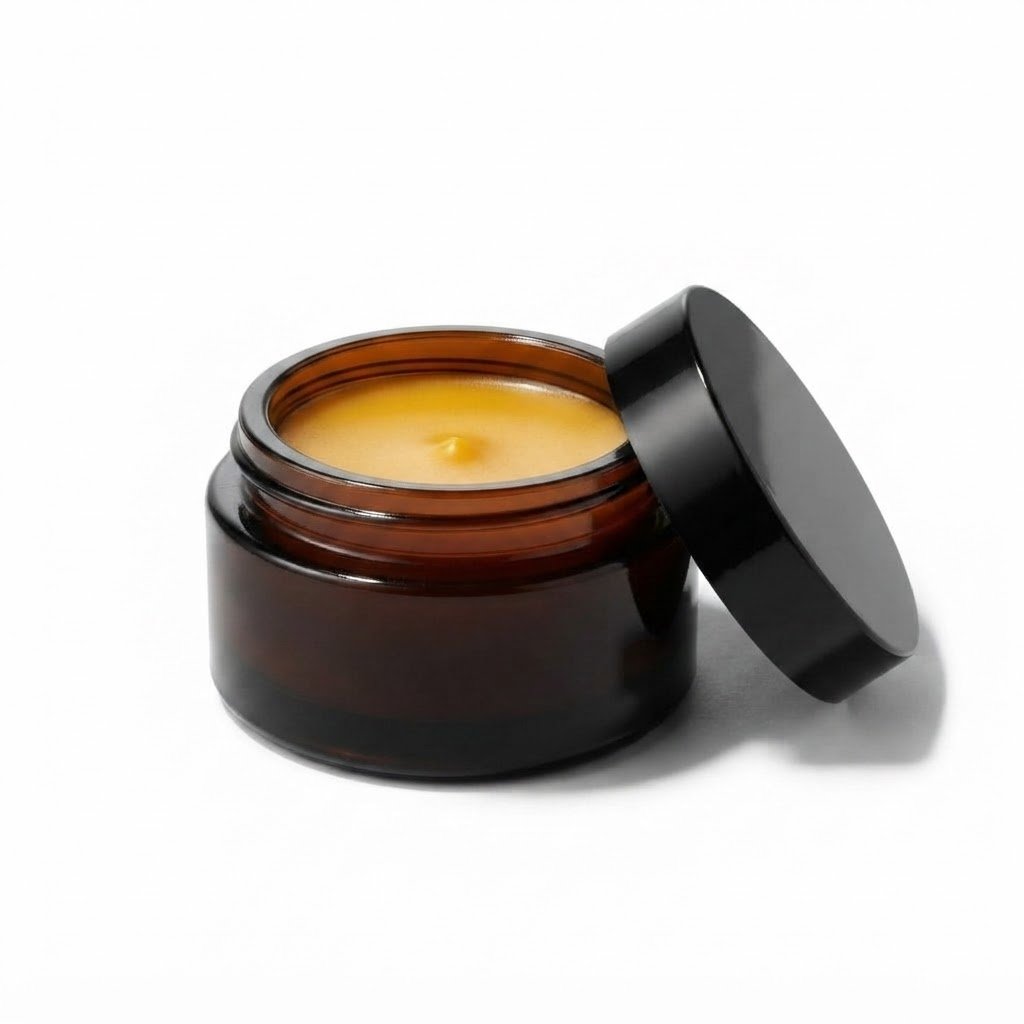
Azure Tansy
Balm™
Intensive Repair and Protection Complex
TerraPure - Original Deodorant
Powerful protection, naturally
Restorative Phyto‑Serum Oil™
Renewal and Balance. Visible transformation in every drop
We empower your skin to thrive.
Sign Up Newsletter
Ready to invest in your skin’s future with the finest natural ingredients? Explore our collections or join our community for expert tips and exclusive access.
We value your trust when sharing your personal data with us. We always treat your data in a fair and respectful manner, limited to the purpose mentioned above. If you would like to know more about how we handle your data, please read our Privacy Policy.