Why Skin Turns Red More Easily in Your 40s — And How to Calm It Gently
Redness arriving in your 40s isn't a flaw; it's a shift. Understanding what's happening beneath is the first step toward calmer, more comfortable skin

Why Skin Turns Red More Easily in Your 40s

There is a particular kind of frustration that comes with looking in the mirror and seeing a flush that wasn’t there a moment ago. A warmth creeping across the cheeks after a glass of wine. A pinkness that lingers long after a shower. Skin that suddenly reacts to a product you have used for years, as though it has quietly changed the rules without telling you.
If this sounds familiar, you are not imagining it. And you are far from alone.
Many women notice, somewhere in their forties, that their skin has become more reactive — more prone to flushing, more easily unsettled, more likely to hold onto redness long after the trigger has passed. It can feel confusing, even unsettling, especially when it seems to arrive without warning.
This is not something that has gone wrong. It is something shifting. And understanding what is happening beneath the surface is the first step toward gentler, calmer, more comfortable skin.
What Is Actually Shifting Beneath the Surface
Skin in our forties is not the same skin we had in our thirties. That sounds obvious, but the changes that contribute to redness are often subtle enough to go unnoticed until they are suddenly, visibly present.
As hormone levels begin to shift — a natural part of the transition toward menopause — the skin’s architecture changes with them. The barrier, that outermost layer that keeps moisture in and irritants out, can become thinner and less efficient. When the barrier is compromised, everything reaches the deeper layers more easily: heat, products, environmental triggers, and even the friction of cleansing.
At the same time, skin can begin to hold onto moisture less effectively. Lipids — the natural fats that keep the barrier supple and sealed — are produced more slowly. The result is skin that feels drier, looks more uneven, and responds more dramatically to things that once felt neutral.
And then there is the cumulative effect of years. Sun exposure, product experimentation, seasons of stress, periods of over-exfoliation — none of these leaves visible marks immediately, but they can quietly reduce the skin’s resilience over time. By the time redness becomes noticeable, it is often less about a single cause and more about the barrier finally asking for a different kind of care.
This is not about something being broken. It is about skin communicating that what worked before may no longer be what it needs now.
Redness Can Look Different from One Person to the Next
One of the reasons redness can feel so hard to address is that it does not always mean the same thing. The way it shows up, the way it feels, and the way it responds to products can vary considerably.
For some women, redness arrives as a wave of warmth — flushing that appears with heat, stress, a particular food, or a glass of wine, then fades. It can feel unpredictable, and the unpredictability itself can become a source of anxiety.
For others, redness is more constant. A pink tone that has settled across the cheeks and nose, almost like a new baseline. It may not feel hot or uncomfortable, but it is visibly there, and it does not seem to fully go away.
Some notice redness that follows breakouts or irritation — skin that stays pink or marked for much longer than it used to, as though it has lost some of its ability to recover.
And for many, redness is directly linked to products. A cleanser that leaves skin tight and flushed. A serum that tingles in a way it never did before. A routine that suddenly feels too much.
None of these patterns is unusual. And none of them means you need to diagnose yourself with anything. But recognising how your own redness behaves can help you understand what kind of support your skin might be asking for.
What Often Makes Redness Harder to Settle
Before thinking about what to add, it can be helpful to consider what might be quietly making things worse. Some of the most common contributors are so embedded in daily routines that they barely register.
Over-cleansing is one of the most frequent. A cleanser that leaves skin feeling “squeaky clean” has almost certainly stripped away some of the protective lipids the barrier relies on. For redness-prone skin, that kind of tight, bare feeling is often a signal that the barrier has been disturbed.
Hot water is another. It feels comforting in the moment, but heat dilates surface blood vessels and can leave already reactive skin looking flushed for hours afterwards.
Physical scrubs and over-exfoliation can create micro-disruption across the surface, weakening the barrier and inviting the kind of low-grade irritation that shows up as persistent pinkness.
Strong active ingredients — particularly when used too frequently or layered without enough buffer — can overwhelm skin that is already struggling to maintain its equilibrium. Retinoids, high-strength acids, and even some vitamin C formulations can tip reactive skin from manageable to unsettled.
Fragrance and overly complex routines can also play a role. The more products and ingredients the skin has to process, the more opportunities there are for something to trigger a response.
And then there is the environment: wind, central heating, air conditioning, and sharp temperature shifts between indoors and outdoors. None of these are within our control, but understanding their impact can help contextualise why some days are harder than others.
The common thread is disruption. Redness-prone skin is often skin that is already working hard to hold itself together. Anything that adds friction — chemical, physical, thermal — can tip the balance.
What Calmer Skin Tends to Respond To
If the problem is too much friction, too much stripping, and too little barrier integrity, then the solution is rarely about adding more active ingredients. It is about creating conditions where skin can settle.
Fewer steps. A simpler routine is not a compromise. For redness-prone skin, it is often the most intelligent approach. Fewer products mean fewer variables, fewer potential triggers, and less work for the barrier.
More barrier support. The skin’s lipid structure needs replenishment, not disruption. Ingredients that echo the skin’s own composition — the ones that feel familiar on contact — tend to be the ones that help skin feel calm, held, and less reactive.
Consistent hydration. Skin that is even slightly dehydrated is more vulnerable. Keeping moisture levels steady, particularly through the evening when the barrier is more permeable, can make a noticeable difference in how skin looks and feels by morning.
A protective evening layer. Skin loses water overnight. A well-chosen balm as the final step can act as a quiet seal — not heavy, not suffocating, just present enough to hold everything in place while you sleep.
Patience. Redness that has been building for months or years will not disappear in days. But skin that is given steady, gentle, consistent care often responds visibly within weeks — feeling softer, looking less flushed, settling into a more even, comfortable state.
The philosophy at the heart of this is simple: calm is not something you force. It is something you make room for.
The Botanicals That Support Redness-Prone Skin
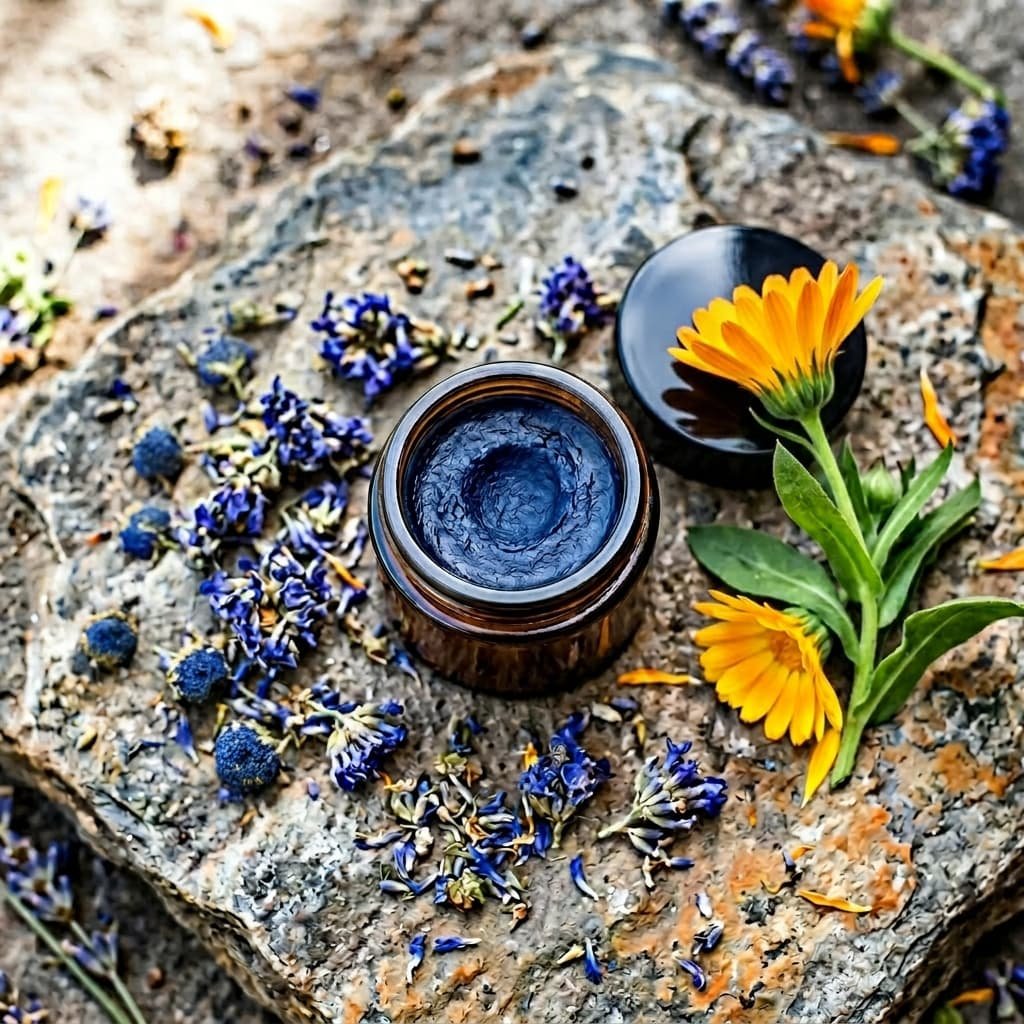
Not all calming ingredients work in the same way. Some soothe the surface. Some support barrier integrity. Some help reduce the look of visible irritation over time. The most effective formulations tend to bring several of these pathways together.
Blue Tansy
If there is one ingredient that has earned its place at the centre of redness-focused botanical skincare, it is blue tansy.
Its deep azure colour — ranging from cornflower blue to almost indigo depending on the harvest — comes from azulene, a compound formed during steam distillation. That colour is not decorative. It signals the presence of something that has been valued for generations in formulations designed for skin that feels unsettled, reactive, or prone to visible flushing.
Blue tansy carries a herbaceous, slightly sweet scent — often described as apple-like with a grounding warmth. In a well-composed formula, it brings both character and a sense of calm. It is not a quick fix. It is an ingredient that works quietly, steadily, and in partnership with the lipids around it.
Calendula
Calendula is perhaps the most enduringly trusted botanical for skin that needs comfort. Its golden-orange petals have been infused into oils for centuries, and its presence in modern skincare is less about trend than about consistency — it simply keeps proving itself useful.
In formulations for redness-prone skin, calendula is valued for its ability to help soften the look of visible irritation, support the barrier, and bring a sense of ease to skin that feels dry, tight, or reactive. It is gentle enough for the most sensitive complexions, versatile enough to be used across the face and body, and deeply aligned with the philosophy of care over correction.
Nettle
Wild nettle is one of those quiet ingredients that has been used for generations without fanfare — valued precisely because it works gently and consistently.
At Ossie, our nettle is hand-harvested from unsprayed, natural environments and slowly infused into nourishing olive oil using a traditional low-heat process. This patient method captures the full character of the living plant. In formulations for redness-prone skin, nettle is appreciated for its ability to help calm the look of reactivity and bring a sense of comfort to skin that flushes easily or feels persistently unsettled. It is especially useful in the cleansing step — where irritation often begins — delivering a clean feel without the tightness that can follow harsher alternatives.
Squalane
Squalane is one of the most universally well-tolerated emollients in skincare — and one with a direct connection to the skin’s own surface chemistry. Derived from squalene, a lipid naturally present in human sebum, it offers softness and slip without heaviness.
On redness-prone skin, squalane helps reduce moisture loss, improves suppleness, and tends to be very well tolerated, even by skin that has become newly sensitive or unpredictable. It is often one of the easiest lipids to wear, precisely because the barrier recognises it.
Evening Primrose Oil
Evening primrose oil earns its place in barrier-supportive formulations through its content of gamma-linolenic acid (GLA), a fatty acid particularly relevant to skin experiencing dryness, hormonal fluctuation, or a growing sense of fragility.
For women navigating the shifts of perimenopause and beyond, evening primrose can feel especially compatible — not because it reverses anything, but because it offers the kind of soft, replenishing lipid support that skin in transition often responds to.
Rosehip and Sea Buckthorn
These two oils often work in partnership. Rosehip brings essential fatty acids and a light, easily absorbed texture — particularly valuable for skin that feels dry but easily overloaded. Sea buckthorn contributes a richer profile, including the rare omega-7 fatty acid, alongside a deep golden-to-orange colour that signals its concentration of carotenoids and antioxidants.
Together, they support skin that is asking for both nourishment and renewal — the kind of visible improvement in texture and tone that comes not from stripping anything away, but from steadily replenishing what the barrier has been missing.
A Gentle Routine for Skin That Flushes Easily
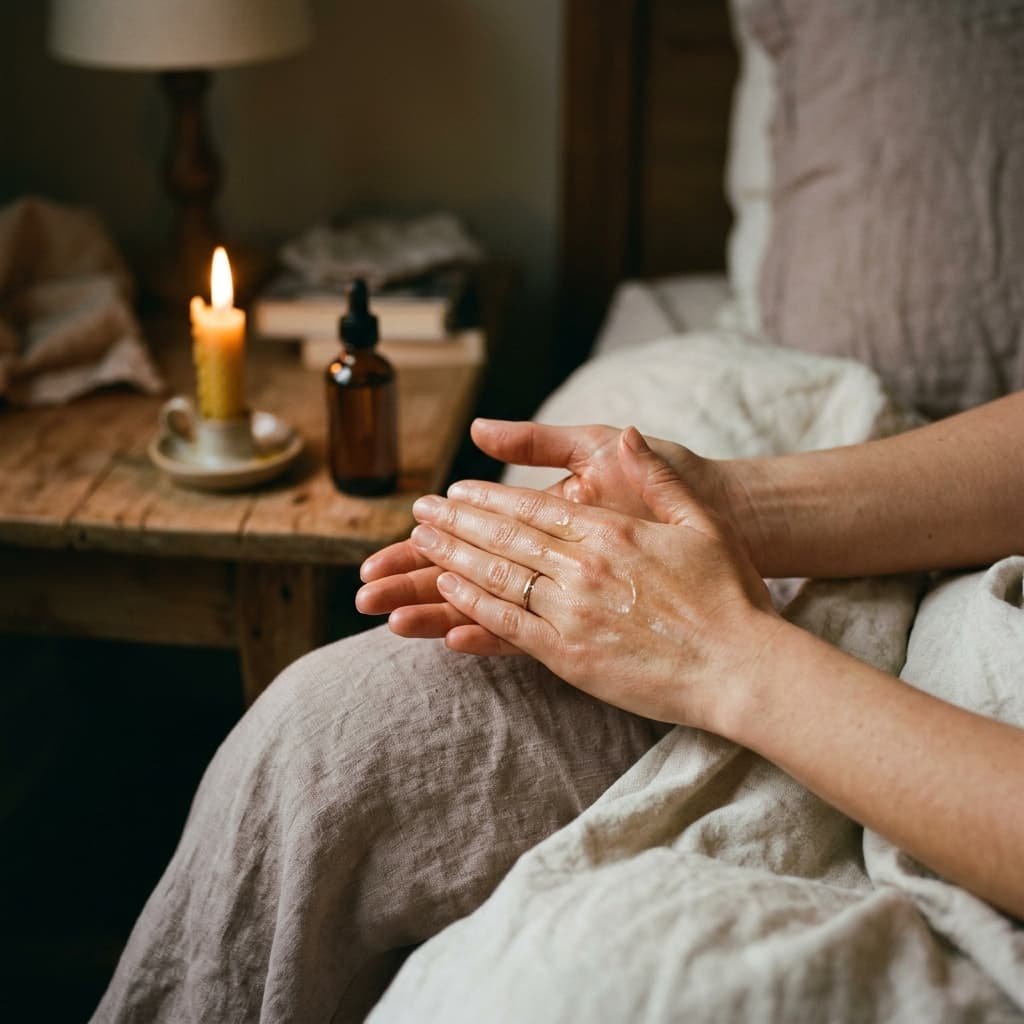
The best routine for redness-prone skin is often the one that feels like very little. Quiet. Unrushed. Composed of products that settle rather than announce themselves.
Morning
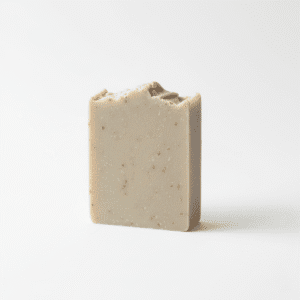
Start with a gentle cleanse. If your skin leans dehydrated or prone to dryness, the Nettle Soap — with wild-collected nettle infused into olive oil, Irish grass-fed tallow, shea butter, aloe butter, raw honey, and colloidal oatmeal — creates a creamy, conditioning lather that leaves skin feeling soft rather than stripped. It was composed for skin that yearns for calm.
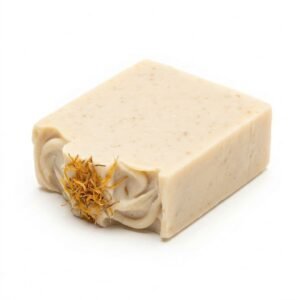
If your skin is very reactive but not especially dry, the Calendula Soap is a gentler alternative — unscented, with calendula-infused olive oil, colloidal oatmeal, aloe vera, kukui, and shea. Do note that on dehydrated skin, it may feel slightly less conditioning than the Nettle Soap, so follow it closely with your serum while the skin is still damp.
On mornings when your skin feels settled and calm, simply rinsing with lukewarm water may be enough.
While skin is still slightly damp, press a few drops of the right serum between your palms and pat it onto the face, neck, and décolletage.
Which serum? For daily barrier support without adding active complexity, reach for the BioLipid Serum Oil — with squalane, grapeseed, jojoba, rosehip, sea buckthorn, evening primrose, and camellia. It delivers a spectrum of barrier-conscious lipids in a texture that feels supple rather than oily.
If your redness is accompanied by a feeling of chronic reactivity — skin that seems to over-respond to almost everything — the Nettle Serum Oil offers a beautifully simple alternative. With wild nettle oil, squalane, jojoba, fractionated coconut, meadowfoam, hempseed, evening primrose, and borage — plus the quiet calming presence of alpha-bisabolol — it is composed to support skin that needs to feel held without being overwhelmed.
Follow with a mineral sunscreen. This is non-negotiable — redness-prone skin is often more vulnerable to UV, and the warmth of sun exposure can trigger flushing that lingers for hours.
Evening
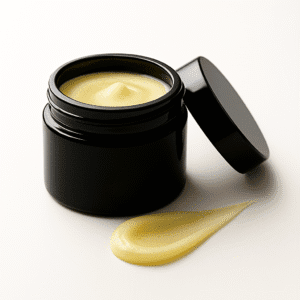
Begin with Soft Cleanse Balm. Warm a hazelnut-sized amount between dry palms, massage it onto dry skin, and let it dissolve the day — makeup, SPF, environmental residue. Add warm water to emulsify, then rinse. With hemp seed, calendula, and a quiet blend of frankincense, lavender, and lemon, it removes everything without leaving skin stripped or tight. For redness-prone skin, this step matters enormously: cleansing should feel like care, not correction.
On damp skin, apply your chosen serum — BioLipid Serum Oil or Nettle Serum Oil — with the same quiet press-and-pat motion. Let it settle for a moment.
Then, as your final step, warm a small amount of one of the balms between your fingertips until it melts to oil. Press it gently over the face, focusing on areas where redness tends to settle — the cheeks, around the nose, the centre of the forehead.
Which balm? This is where understanding your own redness pattern becomes useful:
-
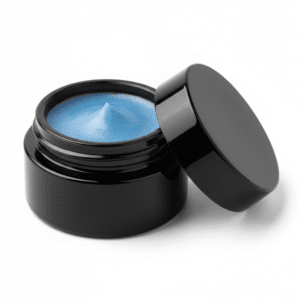
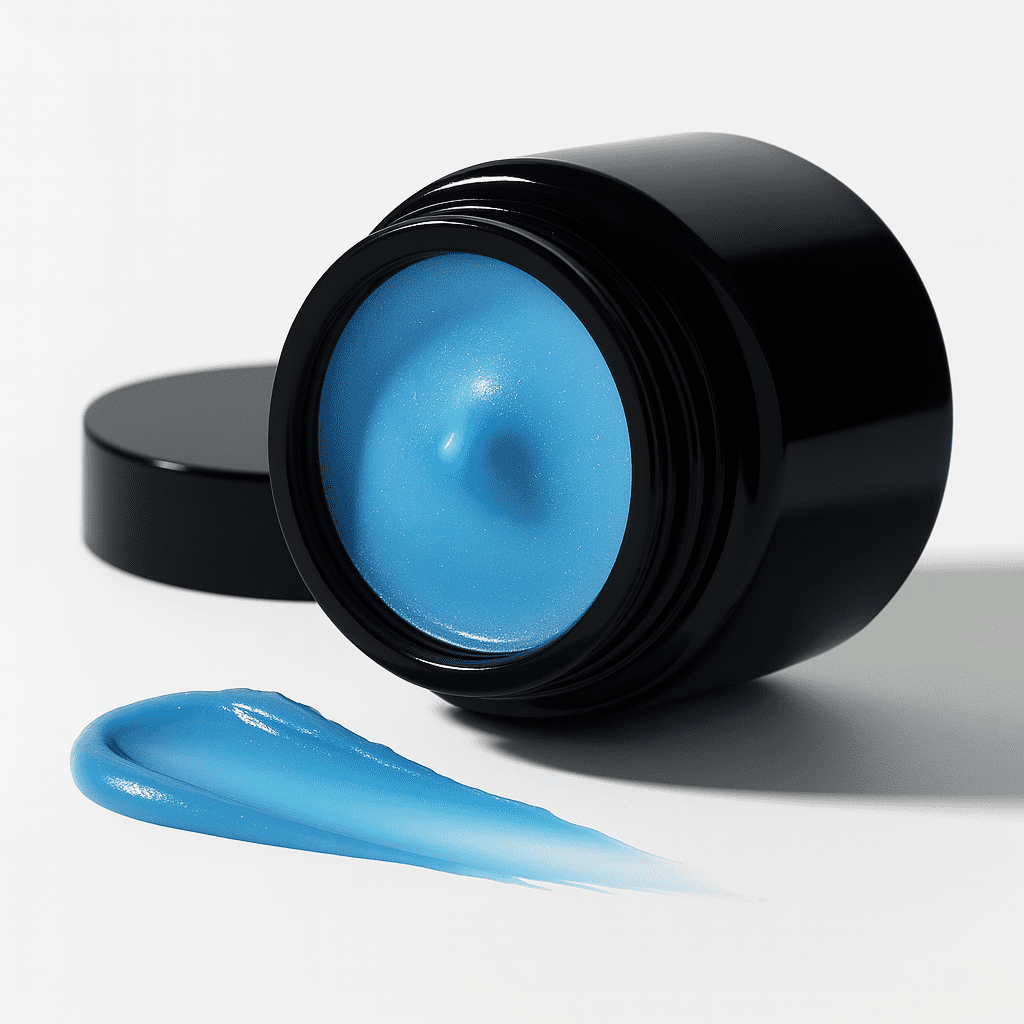
If your redness is reactive — skin that flushes easily, feels hot, responds to products quickly, and seems to flare with heat, stress, or certain foods — Azure Tansy Balm is the natural choice. Its blue tansy, evening primrose, squalane, and shea butter create a calm, protective finish that feels restorative. The balm for skin that needs to feel held.
-
If your skin is persistently unsettled — dry, delicate, reacting to almost everything — Calendula Balm Original offers the gentlest possible layer. Just calendula-infused olive oil, beeswax, bee pollen, and vitamin E. The balm for skin that has had enough.
-
If redness is accompanied by visible dryness, texture, or a sense that skin needs deeper replenishment, Calendula Balm Plus is the richer option. With rosehip, sea buckthorn, and calendula, it supports visible renewal while keeping skin comfortable. The balm for skin is asking for more.
-
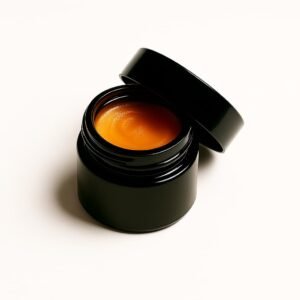
If redness coexists with a feeling that skin has lost density — thinner, more fragile, less resilient — the Seabuckthorn Balm offers a more actively restorative evening layer. With sea buckthorn, bakuchiol, vitamin C, centella, and calendula in a rich occlusive base, it is designed for skin that needs both protection and visible renewal. Its vivid orange hue comes from the sea buckthorn fruit itself.
A Note on Gentle Exfoliation
Many redness-prone skins cannot tolerate traditional scrubs or strong acids, and in most cases, the best approach is to let the barrier rebuild without interference. The “what makes redness worse” section above is the rule, not the suggestion.
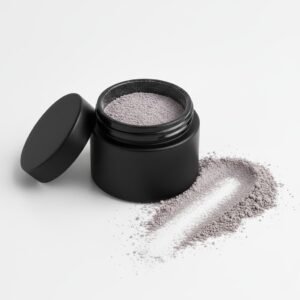
However, if your skin has settled — the reactivity has quietened, the flushing is less frequent, the barrier feels more resilient — you may wish to explore a very occasional, very gentle way to refresh the surface. The Bio-Refining Scrub is a dry powder you activate yourself: finely milled rice powder, amla, oat flour, lavender, nettle, baobab, neem, and kaolin. The key is to mix it with oil rather than water — a few drops of your serum creates a buffering, nourishing paste that polishes without stripping. Use it once a fortnight at most, and never on a day when skin already feels reactive. This is not about correction. It is about a moment of quiet renewal, on your skin’s own terms.
Why Barrier Thinking Matters More Than Chasing Redness Away
There is a quiet truth that runs through everything Ossie does — a philosophy captured in a single line: “My strength isn’t in the products you add, but in the barrier you choose not to break.”
It is easy, when redness appears, to reach for something that promises to “fix” it. A treatment. An active. A product that claims to erase what we see. But redness-prone skin is often skin that has already been through enough. What it tends to respond to is not more correction, but more support.
A stronger barrier is its own kind of calm. When the outermost layer is intact and well-lipidated, heat and irritants reach the deeper layers less easily. Blood vessels at the surface become less visible. Products feel more comfortable. The baseline pinkness that seemed so permanent begins to soften — not because anything was aggressively treated, but because the skin was finally given what it needed to settle on its own terms.
This is not about perfection. It is about consistency. About choosing, day after day, to support rather than strip. To protect rather than punish. To let calm become the default, not something that has to be constantly chased.
The Takeaway
Redness that arrives in your forties is not a sign that something is wrong with your skin. It is a sign that your skin is changing — and that the way you care for it may need to change, too.
The most effective path is rarely the most complicated one. A gentle cleanse. A barrier-conscious serum — whether the daily simplicity of BioLipid or the quiet calming of Nettle. A protective balm as the final step, chosen to match the way your redness behaves. Consistency. Patience. And a willingness to let go of the idea that more is always better.
Your skin knows how to find its way back to calm. Sometimes it just needs a little less noise, a little more protection, and a formula that feels like recognition at first touch.
Explore the products mentioned:
Cleansers
Serums
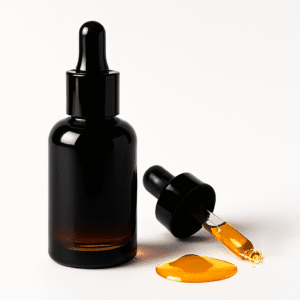
Bio-Lipid Serum Oil
A lipid-rich composition that supports softness, flexibility, and everyday barrier comfort without ever feeling heavy
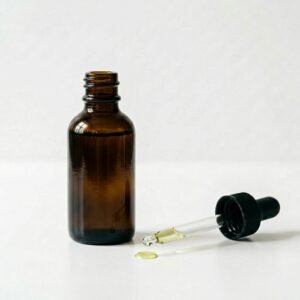
Nettle Serum Oil
A lightweight calming veil that helps soften the look of redness, supports a more settled, balanced complexion and restores everyday comfort
Balms
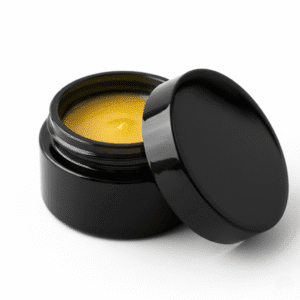
Calendula Balm Original
When skin says no to everything else. The simplest, gentlest balm we make — just a quiet seal of comfort for the most sensitive, easily unsettled complexions.
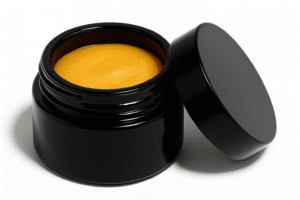
Calendula Balm Plus
Where redness meets dryness. A richer, more restorative calendula balm with rosehip and sea buckthorn to replenish, soften, and support visible renewal.
Azure Tansy Balm
A protective, azure-rich balm that helps quiet the look of redness and leaves reactive skin feeling held, calm, and deeply comforted.
Seabuckthorn Balm
For skin that feels thinner, more fragile, less resilient. A concentrated restorative balm that helps rebuild a sense of density and protection while supporting lasting comfort.
Scrub
Bio-Refining Scrub
The gentlest kind of renewal. A powder you activate yourself — with water for a light polish or oil for a buffered, nourishing treatment.
For Further Reading
Support Your Skin
Our natural product collection at Ossie Naturals is formulated specifically to support your skin’s natural adaptive processes. Each product provides the building blocks your skin needs, from barrier-supporting lipids to adaptive antioxidants.
We don’t believe in dramatic seasonal routine overhauls or aggressive treatments that fight against your skin’s natural processes. Instead, our approach focuses on gentle, consistent support that works with your skin’s intelligence rather than against it.
Join our private community on Facebook or join our Newsletter for access to seasonal transition guides, ingredient education, and products specifically formulated to support your skin through changes because your skin’s adaptive intelligence deserves support, not interference.
Performance‑led, nutrient‑rich compositions
Our House Collection
Calendula Balm - Original™
Restorative and Calming Concentrate
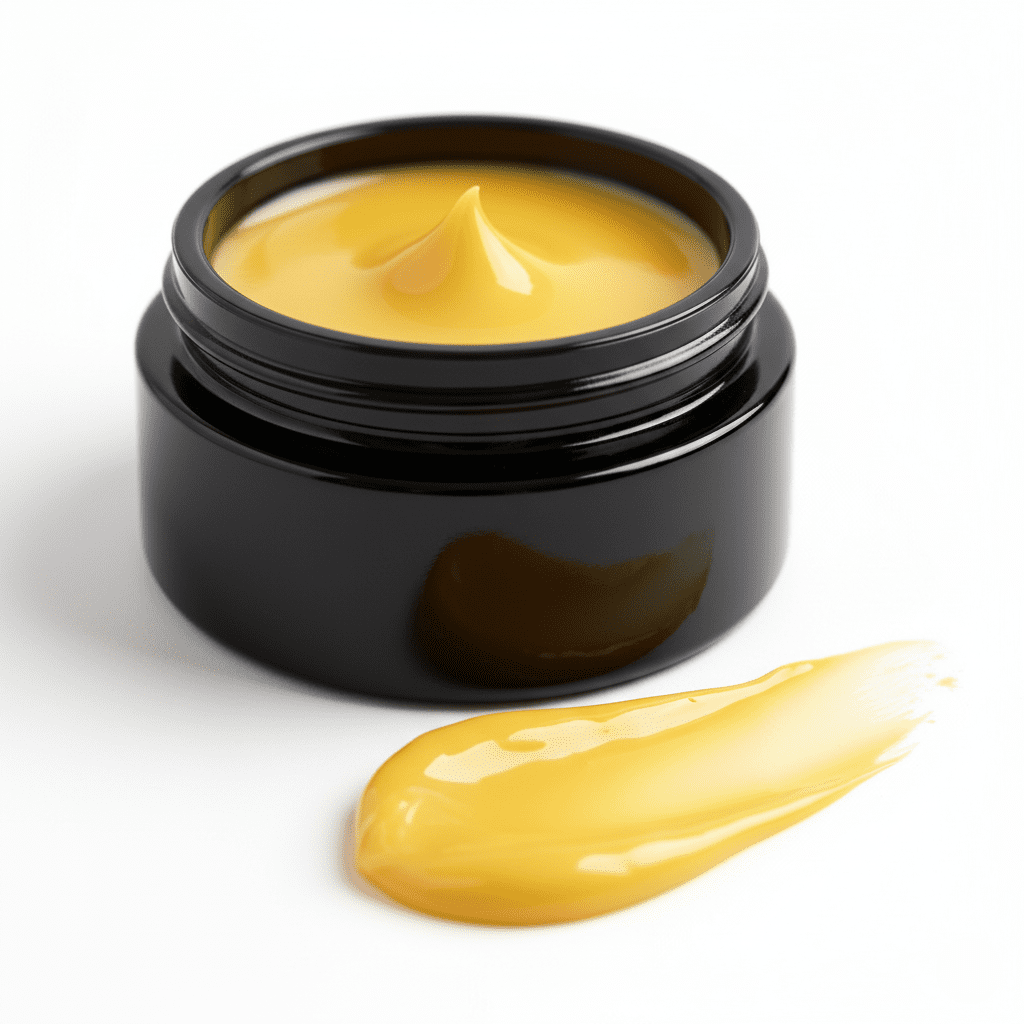
Azure Tansy
Balm™
Intensive Repair and Protection Complex
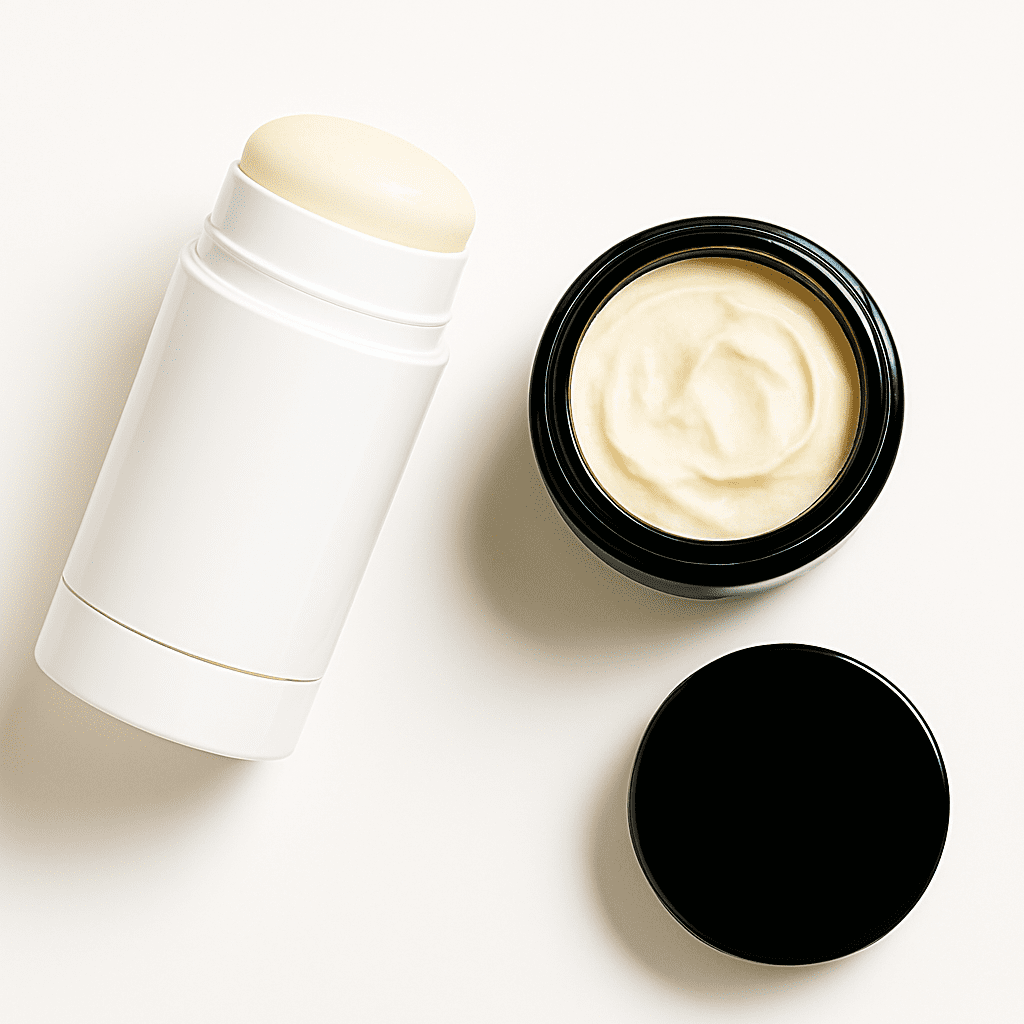
TerraPure - Original Deodorant
Powerful protection, naturally
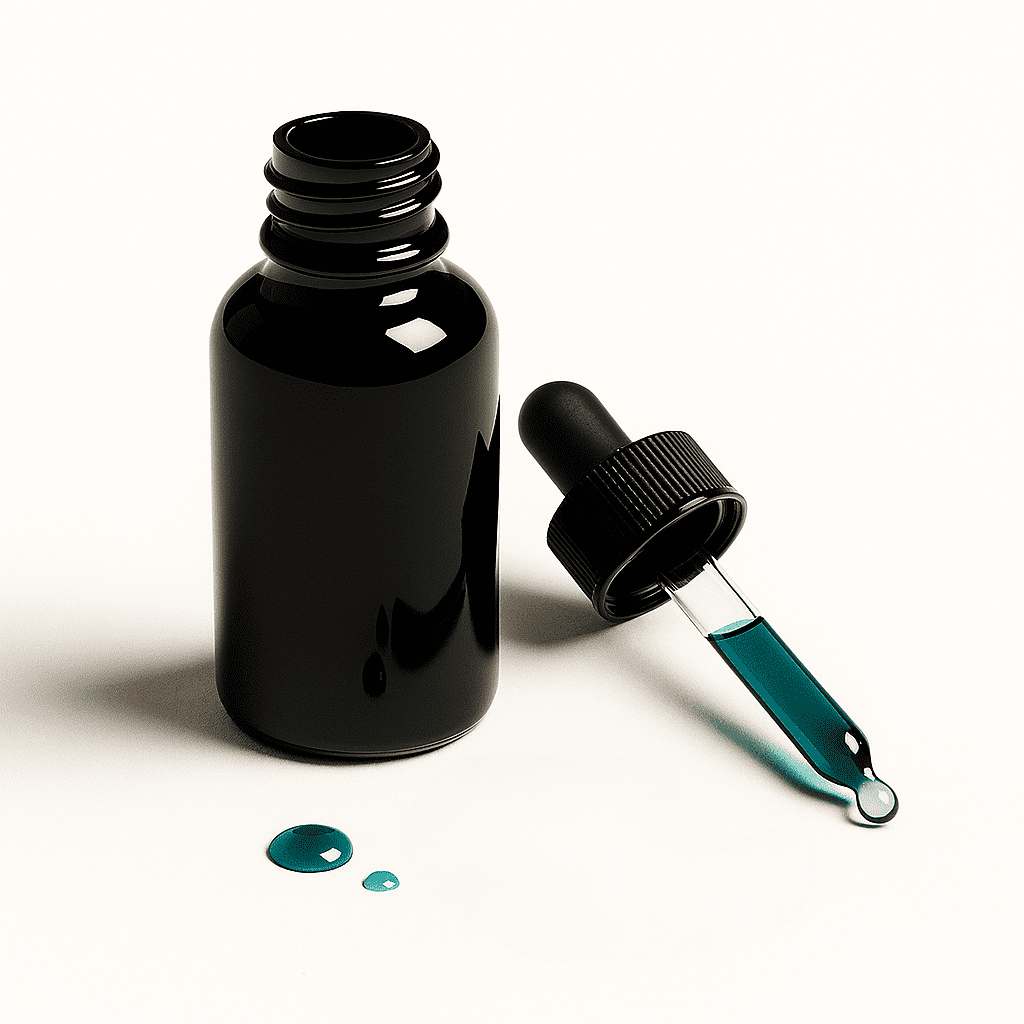
Restorative Phyto‑Serum Oil™
Renewal and Balance. Visible transformation in every drop
We empower your skin to thrive.
Sign Up Newsletter
Ready to invest in your skin’s future with the finest natural ingredients? Explore our collections or join our community for expert tips and exclusive access.
We value your trust when sharing your personal data with us. We always treat your data in a fair and respectful manner, limited to the purpose mentioned above. If you would like to know more about how we handle your data, please read our Privacy Policy.