The Exfoliation Ceiling: How Much Is Too Much
Learn to recognise your skin's exfoliation ceiling and build a gentler routine for mature or sensitive skin at a comfortable pace.

The Exfoliation Ceiling: How Much Is Too Much for Mature or Sensitive Skin
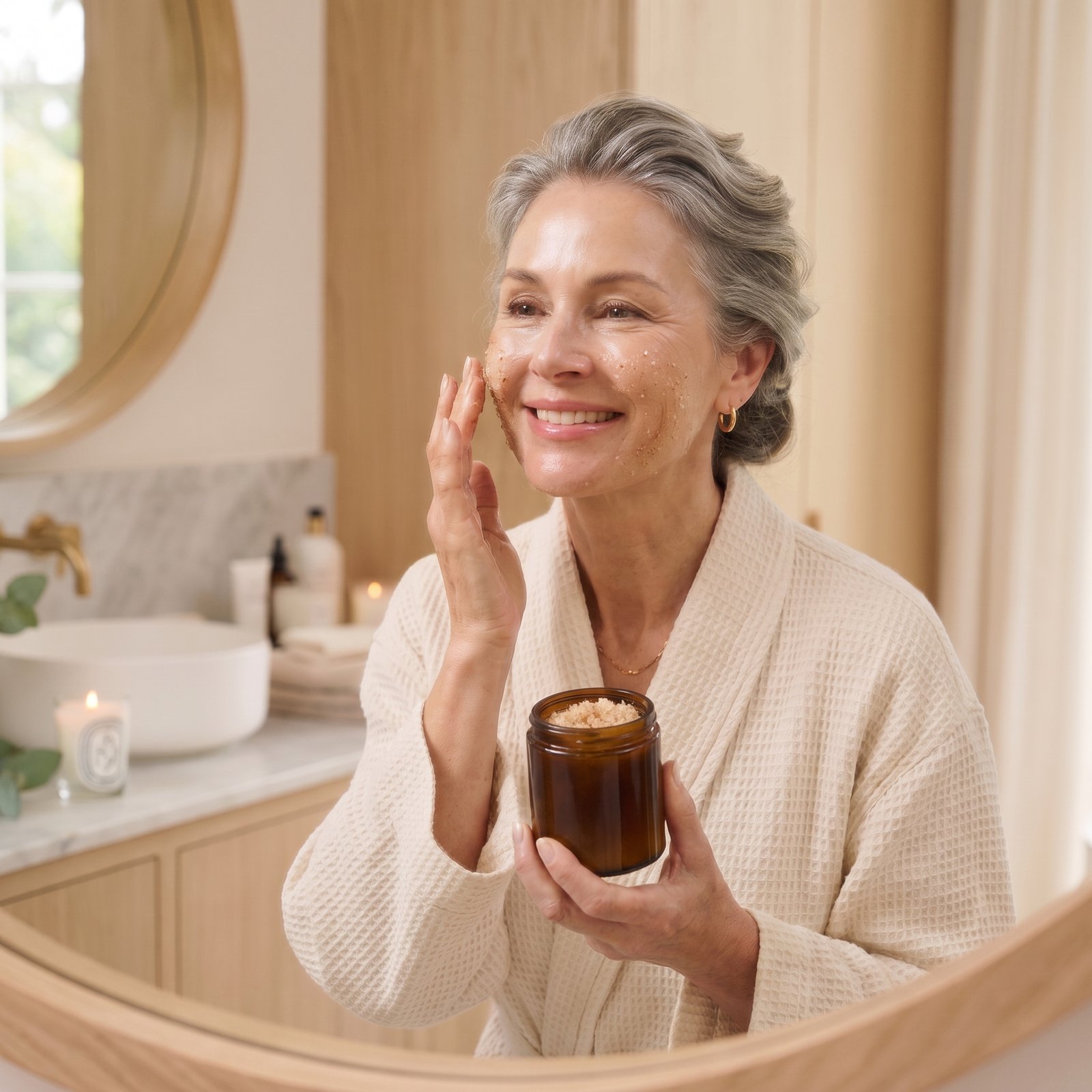
When the skin looks dull, rough or uneven, exfoliation can feel like the obvious answer. A scrub leaves the face smooth, an acid toner promises a clearer-looking surface, and an exfoliating cleanser seems gentle enough to use often. Each step has a persuasive logic of its own.
The difficulty begins when the routine is judged bottle by bottle. The skin does not divide its experience into neat categories. It experiences pressure, friction, acids, cleansing and renewal-focused steps as one sequence. A scrub at the weekend, an exfoliating cleanser on Monday and a retinoid two nights later are not entirely separate events if the skin is still recovering its ease.
This is an important distinction for mature, sensitive or newly unpredictable skin. The question is not simply, “How often should I exfoliate?” It is, “At what point does this step stop refining the surface and begin asking too much of it?”
That point is the exfoliation ceiling. It is not a fixed number, a badge of commitment or a rule copied from somebody else’s routine. It is the point at which the complete ritual begins to take away more comfort than exfoliation adds in refinement.
The Important Question Is Not How Often
Exfoliation is the deliberate removal or loosening of built-up cells at the skin’s surface. Mechanical methods rely on contact: a scrub, cloth, brush, sponge or textured pad. Chemical exfoliants rely on ingredients such as alpha or beta hydroxy acids. Both methods can leave the surface feeling smoother, but they do not ask the same thing of the skin.
A soft cloth used lightly is different from firm pressure with a coarse scrub. A mild rinse-off formula is different from a leave-on acid. Contact time, texture, pressure, frequency and the rest of the routine all alter the experience. This is why a universal weekly schedule is rarely useful.
At Ossie Naturals, we begin with proportion. The aim is not to find the greatest amount of exfoliation the skin can endure. It is to find the lowest frequency that has a clear purpose and still leaves the skin comfortable between uses. That is a more considered measure of care than chasing immediate smoothness.
The ceiling can move as well. Indoor heating, cold wind, travel, fatigue, hormonal change, a new active or a professional treatment can change how the skin responds. A routine that once felt effortless can become too full without any single product suddenly becoming wrong.
Smoothness Is Not The Same As A Comfortable Routine
Exfoliation gives an immediate result because it changes the feel of the surface. That immediate result is real, but it is not the full verdict. A face can feel polished just after a treatment and still become tight, flaky or reactive later in the day or the following morning.
This is where many routines become confusing. When the skin feels dry after an exfoliating step, the instinct is often to add another product. When texture reappears, the instinct can be to exfoliate again. Soon the routine is responding to the consequences of its own intensity. The original purpose of exfoliation gets lost.
An experienced approach separates appearance from comfort. Notice the next cleanse, the next moisturiser and the next morning. Does water feel ordinary on the face? Does a familiar moisturiser settle easily? Does make-up sit as expected? Does the skin look refined without feeling as though it needs constant compensation? These ordinary moments reveal more than the glow immediately after a scrub or acid.
Exfoliation earns its place when it makes the routine feel clearer, not more complicated. If it creates a cycle of roughness, tightness and extra corrective steps, the answer is usually not another active. It is more space.
Mature Skin Deserves Observation, Not A Template

With time, skin can change in hydration, surface texture and its response to environmental or cosmetic stress. For some people, dryness becomes more noticeable. For others, previously familiar products begin to feel different. These changes can make a smoothing step especially tempting.
But mature skin is not one skin type. It is not automatically fragile, nor does it automatically need stronger exfoliation in order to look fresh. One person may remain comfortable with an active routine; another may need a quieter rhythm. Age alone cannot choose the method or frequency.
This is why observation matters more than a label. After exfoliating, notice how quickly the skin returns to its usual sense of ease. Observe whether it stays supple through a normal day, or whether it looks smoother while feeling taut underneath. Pay attention when a trusted cleanser or moisturiser begins to sting. These are not failures. They are useful information.
For women whose skin has become sensitive, reactive or unpredictable after years of using products without difficulty, that information is particularly valuable. A well-built routine leaves room to notice a change rather than covering it with more steps.
The Whole Routine Changes The Meaning Of One Exfoliating Step
The most useful routine assessment is a complete one. Look beyond the product called an exfoliant. Include acid toners, peel pads, exfoliating cleansers, textured cloths, scrubs and masks. Then look at the other steps that make the week more demanding.
Retinoids are not exfoliants in the same way as acids or scrubs. They belong to a different category. Yet, particularly while the skin is becoming accustomed to them, they can be accompanied by dryness or peeling. That matters when deciding whether an exfoliating step has a place in the same week.
The point is not to create a long list of forbidden combinations. It is to stop treating each active as if it exists alone. A person may say, “I only exfoliate once a week,” while using several renewal-focused or drying steps around it. The skin experiences the complete pattern, not the individual claims on each label.
Make a simple inventory of the week. Mark the evenings when you use an acid, a retinoid, a scrub, an exfoliating cleanser or receive a professional treatment. If one of those steps is prescribed, do not change it to make room for a cosmetic exfoliant. Keep the prescribed plan as directed and ask the prescriber how the rest of the routine should sit around it.
This kind of inventory is quiet but powerful. It turns a vague sense that the skin is “doing too much” into something visible. It also helps you see where a calm evening, a straightforward cleanse or a familiar moisturiser can restore balance to the week.
Learn The Difference Between A Signal And A Challenge
The first sign of excess is not always dramatic. It can be a subtle loss of ease: water feels sharper on the face, a familiar moisturiser tingles, make-up catches on fine flakes, or the skin looks smooth but feels tight underneath.
Persistent redness, burning, tenderness, irritation and new flaking deserve more attention. So does a sudden rise in sensitivity or breakouts, although either can have more than one cause. The important point is that discomfort which continues, intensifies or appears with products that were previously comfortable is not a test of commitment.
An exfoliating product can sometimes create a brief sensation that its directions describe. That is different from a routine that becomes increasingly uncomfortable. The aim is never to train yourself to tolerate pain in the name of results.
When these signals appear, simplify rather than correct. Pause exfoliation, return to a gentle cleanser and a familiar moisturiser, and keep daily sun protection consistent. If changes are persistent, severe or concerning, seek professional assessment rather than adding another active step in the hope of correcting them.
A Routine With Space Is Easier To Understand
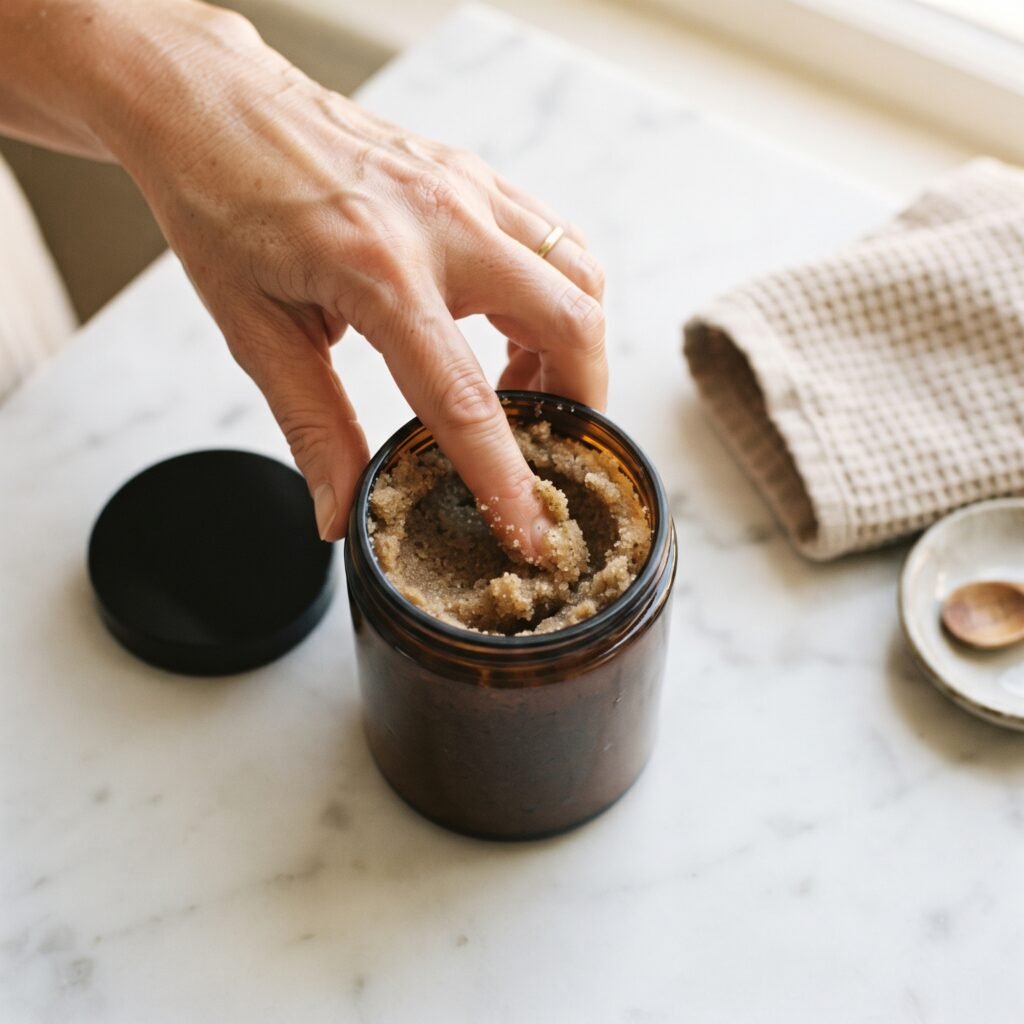
Space between demanding steps is not an empty part of a routine. It is how you learn what the skin can comfortably receive. An evening with no exfoliation, no new acid and no extra friction gives you a clearer view of how the skin feels on its own terms.
This is especially useful when you are introducing something new. Do not bring in a new acid toner and a new scrub in the same week. One change at a time makes it easier to recognise what is helping, what is too much and what simply does not belong in the routine.
It also makes the routine more realistic. Sophisticated skin care is not a crowded shelf or a calendar filled with treatment nights. It is a rhythm in which each chosen step has a purpose, the skin has time to settle, and the person using the routine can understand the response.
Sun exposure belongs in that rhythm. Products containing alpha hydroxy acids can increase sensitivity to the sun while they are being used and for a period afterwards. Follow the warning and directions on the specific product, and make daily sun protection part of the routine rather than an afterthought.
Find The Lowest Frequency That Still Earns Its Place
Begin with a simple question: what is this exfoliating step for? It may be a rough surface, visible flaking, or texture that is no longer responding to the rest of the ritual. If the answer is only that a complete routine seems to require an acid or scrub, pause there. A product does not earn a permanent place merely because it is popular.
Choose one method, follow its directions and use a light hand with mechanical exfoliation. If the label permits a range of use, begin at the gentler end instead of treating the maximum as a goal. Follow with a suitable moisturiser and leave the rest of the routine uncomplicated enough to observe the result.
Then give the skin time. The relevant result is not simply how smooth it feels in the first ten minutes. Notice the following cleanse, the following moisturiser and the following morning. A useful rhythm should allow the skin to remain calm, flexible and receptive to ordinary contact.
If the result is useful and the skin remains settled, keep that frequency steady. If discomfort appears, reduce it or pause. If nothing changes, reconsider the purpose, method or directions before increasing frequency. More often is not automatically more effective; sometimes it only makes the answer harder to see.
A Simple Weekly Check-In
Before using an exfoliating step, ask:
- Does my skin feel comfortable with water, cleanser and moisturiser today?
- Have I already used a retinoid, acid, scrub, peel pad or exfoliating cleanser recently?
- Is there redness, tenderness, flaking, sunburn or broken skin?
- Does the product label support this timing and combination?
- Can I keep the rest of the routine simple enough to observe the response?
If the skin feels comfortable, the week has space and the directions align, proceed gently. If it feels unsettled or several active steps already occupy the week, waiting is the more informed choice.
This is the kind of practical judgement we value at Ossie Naturals: enough information, enough space and a ritual that respects what the skin is telling you.
A Final Word
Exfoliation is often described as an act of removal. Its real value is better measured by what remains: comfort, flexibility and a surface able to receive the rest of the ritual with ease.
The exfoliation ceiling is not a challenge to reach. It is a boundary to recognise. Below it, a carefully chosen step can refine texture and sit quietly within the week. Beyond it, the routine begins asking the skin to recover from the care intended to improve its appearance.
Mature and sensitive skin benefit from being listened to well. A change in season, a new active or a shift in how the skin feels can alter what is comfortable. Adjusting the routine is skilled attention.
The most refined ritual is not the one that removes the most. It is the one that knows when enough has already been achieved.
Continue Reading
Support Your Skin
Our natural product collection at Ossie Naturals is formulated specifically to support your skin’s natural adaptive processes. Each product provides the building blocks your skin needs, from barrier-supporting lipids to adaptive antioxidants.
We don’t believe in dramatic seasonal routine overhauls or aggressive treatments that fight against your skin’s natural processes. Instead, our approach focuses on gentle, consistent support that works with your skin’s intelligence rather than against it.
Join our private community on Facebook or join our Newsletter for access to seasonal transition guides, ingredient education, and products specifically formulated to support your skin through changes because your skin’s adaptive intelligence deserves support, not interference.
Performance‑led, nutrient‑rich compositions
Our House Collection
Calendula Balm - Original™
Restorative and Calming Concentrate
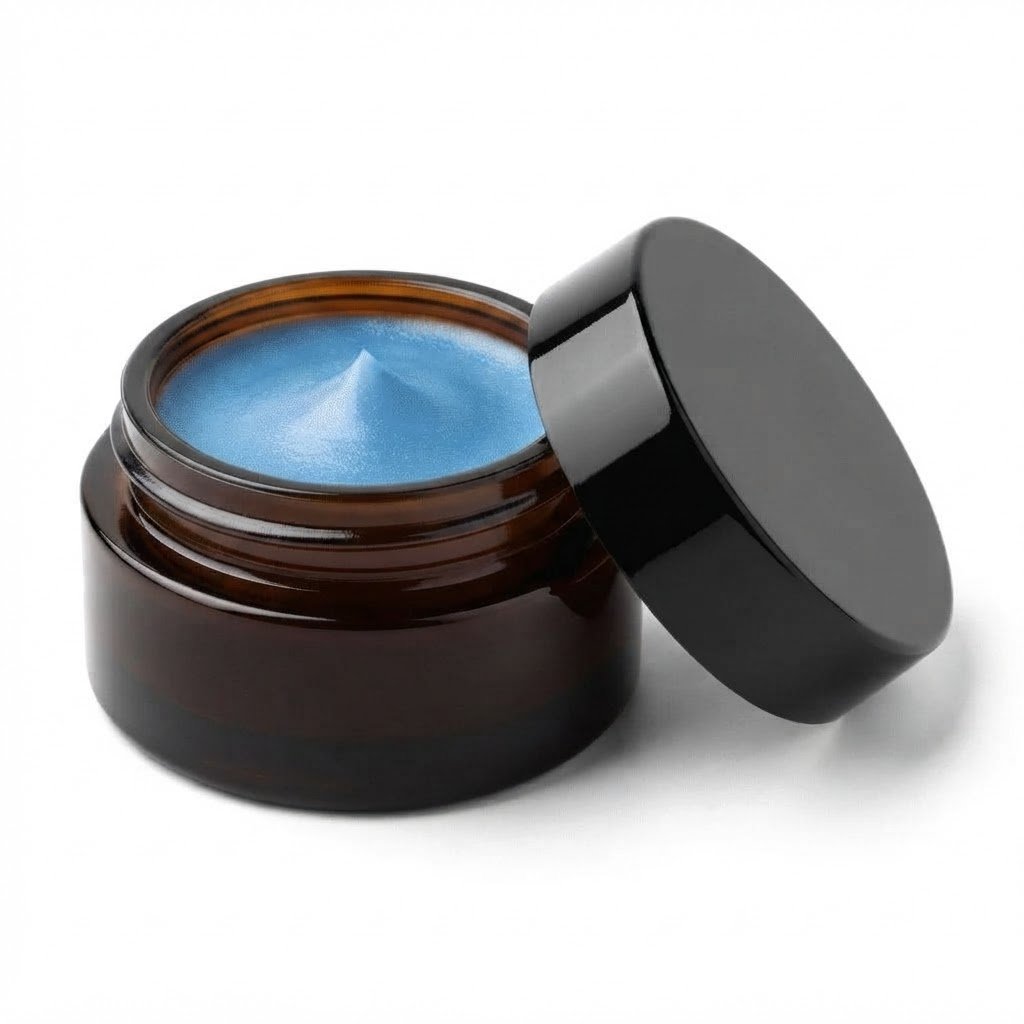
Azure Tansy
Balm™
Intensive Repair and Protection Complex
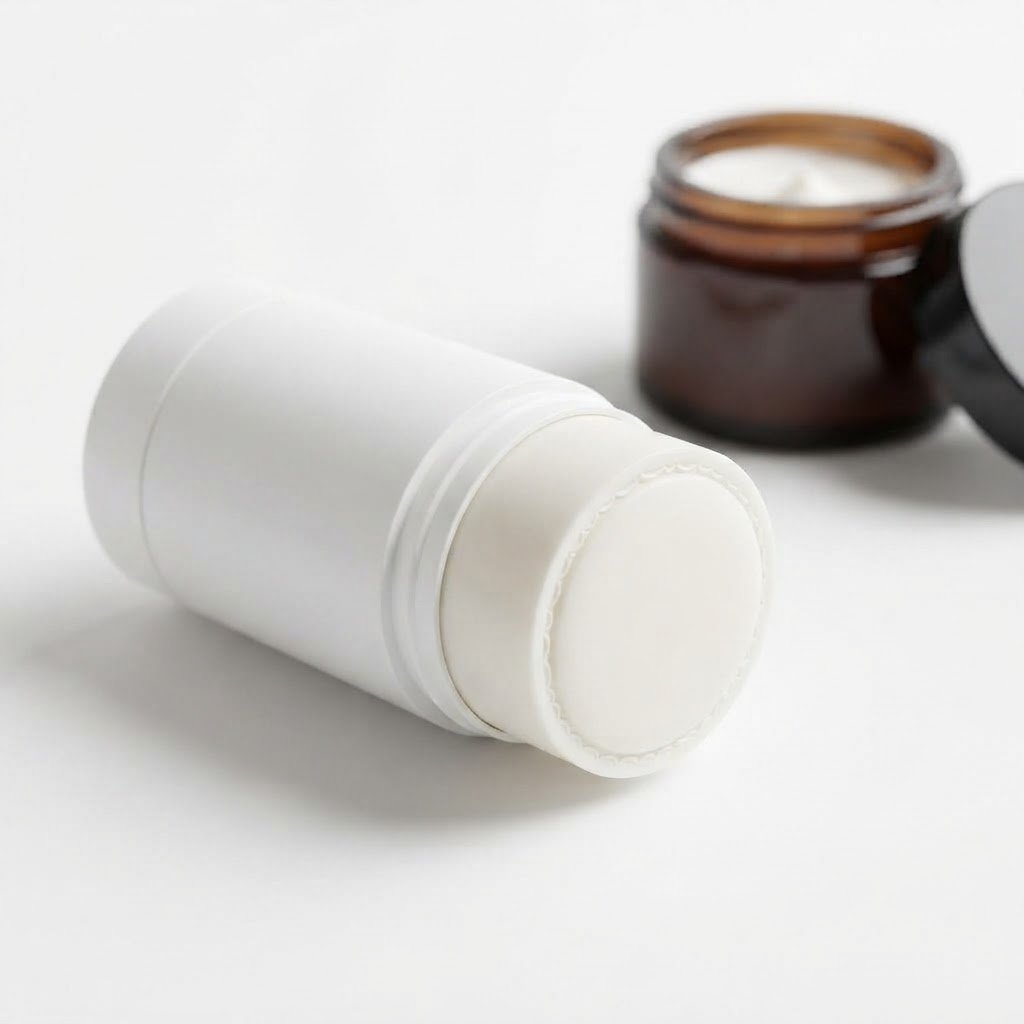
TerraPure - Original Deodorant
Powerful protection, naturally
Restorative Phyto‑Serum Oil™
Renewal and Balance. Visible transformation in every drop

We empower your skin to thrive.
Sign Up Newsletter
Ready to invest in your skin’s future with the finest natural ingredients? Explore our collections or join our community for expert tips and exclusive access.
We value your trust when sharing your personal data with us. We always treat your data in a fair and respectful manner, limited to the purpose mentioned above. If you would like to know more about how we handle your data, please read our Privacy Policy.